 Meta Description
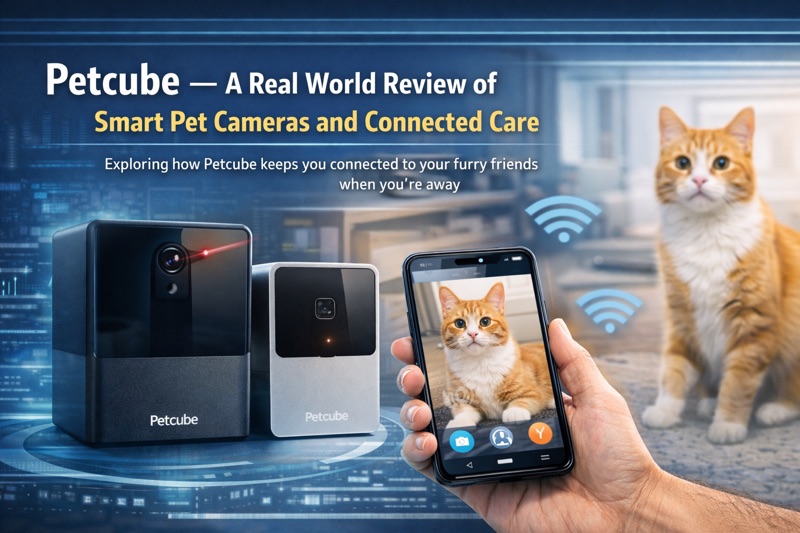
Petcube is a line of smart pet cameras and connected pet care devices that offer live video, two-way communication, movement alerts, and behavior tracking. This comprehensive review explains how Petcube works, what problems it solves, its limitations, and how it fits into modern pet ownership without overselling its value.
Introduction
Pet ownership has always been emotional and unpredictable.
For decades, owners worried silently whenever they left the house. Did the dog bark at strangers? Was the cat anxious? Did someone need attention? Silent hours became guesswork.
Then technology entered — first as desktop webcams, then smartphone apps, and now as integrated pet cameras like Petcube. Unlike ordinary cameras, Petcube blends connectivity with insight: video feeds, notifications, sound interaction, and AI-assisted alerts.
This promises something beyond surveillance: a digital window into your pet’s world.
But visibility is not certainty.
Interaction is not understanding.
Notifications are not context.
What Petcube delivers — and where it stops — is crucial for any owner considering it.
This review dissects Petcube not as a gadget page, but as a tool in real, everyday pet care.
What Is Petcube?
Petcube is a brand of connected pet cameras and devices designed to help owners monitor and interact with their pets remotely. The lineup includes products like:
- Petcube Cam
- Petcube Bites (with treat dispensing)
- Petcube Play (with laser and interactive games)
- Petcube Care subscription services
These devices combine:
- Real-time video streaming
- Two-way audio
- Motion and sound alerts
- Treat or toy interaction (in some models)
- Optional AI alerts through subscription
The stated goal is simple:
Let owners see, speak to, and engage with their pets when they are not home.
But in practice, Petcube positions itself at the intersection of:
- Remote observation
- Interaction mechanics
- Behavioral visibility
- Owner reassurance
Not as a behavioral diagnosis tool, not as a substitute for human presence — but as digital presence enhancement.
How Petcube Works
At a technical level, Petcube systems are built on several layers:
1) Hardware Sensors
Each Petcube includes:
- HD camera (wide angle)
- Microphone + speaker
- Motion detector
- Optional treat shooter / laser toy
Depending on the model, the hardware delivers different interaction levels.
2) Live Streaming and App Integration
Owners install the Petcube app on a smartphone or tablet and connect the device to Wi-Fi.
Once connected:
- Live video is accessible
- Real-time audio is possible
- Alerts are delivered instantly
The app becomes the user interface for all interactions.
3) Two-Way Audio
This allows:
- Listening to household sounds
- Speaking to the pet remotely
Human voice becomes a remote presence, attempting reassurance or redirection.
But audio on its own does not quantify emotion — it only gives context.
4) Interaction Mechanisms
Certain Petcube models add:
- Treat dispensing
- Laser play
- Motion-triggered responses
This extends beyond passive monitoring into remote engagement.
5) Alerts and AI-Assisted Features
Petcube can notify owners of:
- Motion
- Unusual sound
- Person detection
- Crying, barking, or whining (in some subscriptions)
These alerts aim to reduce silent monitoring into signal-driven responses.
The subscription tier adds:
- Cloud recording
- Smart alerts
- Historical activity logs
What Petcube Does Well
Petcube’s value is best understood when separated from excessive expectations and viewed in practical daily use.
1)
Remote Visibility Is Real
Being able to see your pet as events unfold is meaningful.
It gives:
- Reassurance
- Context for behavior
- Answers to “what’s happening right now?”
This is especially relevant for:
- apartment dwellers
- owners with long work hours
- households with multiple pets
Even a static webcam misses the interactive dimension Petcube offers.
2)
Two-Way Communication Adds Reassurance
Talking to a pet may not train it, but it can:
- calm anxiety
- reduce owner guilt
- signal presence
- orient the pet in certain environments
For some dogs and cats, even hearing a familiar voice can change behavior temporarily.
3)
Treat and Play Features Enhance Engagement
Petcube Bites and Play introduce interaction beyond look/listen.
Owners:
- toss treats remotely
- trigger play sessions
- simulate engagement
This does not replace physical play, but it does reinforce:
- scheduling
- positive distraction
- intermittent reinforcement during absence
4)
Behavior Recording Beats Memory
Often owners describe pet behavior in vague terms like:
“He seems more anxious lately.”
Petcube provides specific recorded moments — a bark at 3:12 PM, pacing at 4:45 AM — which helps track:
- anxiety episodes
- triggers
- response patterns
This can make vet consultations more precise.
5)
Notifications Reduce Silent Guesswork
Instead of wondering if something is going on, owners receive alerts when:
- motion is detected
- unexpected sound occurs
- person appears on camera
This transitions from passive monitoring to active awareness.
Where Petcube Falls Short
No pet tech is perfect — and Petcube’s limitations are as important as its features.
1)
Video Alone Does Not Explain Behavior
Seeing a dog pace does not answer:
- Why is he pacing?
- Is it pain, stress, boredom, or habit?
Petcube shows activity, not meaning.
2)
Two-Way Audio May Increase Confusion
In some cases, hearing a voice without physical presence:
- can excite the dog
- can trigger frantic searching
- can heighten anxiety in certain temperaments
Not all pets associate remote voice with reassurance.
3)
Treat Dispensing Has Mixed Results
Remote treats can:
- reinforce calm behavior
- create anticipation loops
- become a “dog checking station”
Some dogs may:
- bark more to solicit treats
- crowd the camera area
- become unfocused
4)
AI Alerts Are Not Diagnostic
Smart notifications are helpful, but:
- barking ≠ distress
- motion ≠ anxiety
- silence ≠ calm
Alerts reduce silent waiting, but they do not interpret why an event occurs.
5)
Subscription Tiers Limit Core Value
Some of the more nuanced notifications, cloud storage, and AI features require paid plans.
Basic monitoring is free, but advanced insights are behind paywalls.
6)
Internet and Wi-Fi Dependence
Lag, video quality drops, and connectivity issues can distort:
- audio timing
- video clarity
- interaction responsiveness
Poor connectivity transforms Petcube from real-time tool into delayed snapshots.
Behavioral Reality Check
Many pet owners approach Petcube with unspoken expectations:
- “Will this stop separation anxiety?”
- “Will this replace physical interaction?”
- “Can this train my dog?”
These questions reflect a deeper misunderstanding:
Petcube assists awareness and interaction —
it does not replace presence or training.
Separation anxiety, for example, often requires:
- gradual desensitization
- behavioral training
- socialization
- routine changes
Petcube may help owners notice anxiety patterns, but it does not fix the underlying cause.
Practical Use Cases
Understanding Petcube’s value becomes clearer when evaluated across real scenarios:
Apartment or Urban Living
Close neighbors may demand:
- barking alerts
- noise reduction
- proof of calm behavior
Petcube’s notifications and recordings provide concrete evidence of behavior patterns.
Long Work Hours or Travel
Owners can:
- check in mid-day
- reassure pets
- observe routines
- adjust evening routines based on patterns
This reduces uncertainty and guilt.
Shared Caregiving
In households with:
- multiple caregivers
- dog walkers
- relatives caring for pets
Petcube provides a shared reference for what happens during absences.
Behavioral Tracking for Veterinary Dialogue
If a dog:
- barks at specific times
- declines activity gradually
- shows repeated pacing
These patterns, logged or recorded, offer vets more context than owner memory alone.
Ethical and Privacy Considerations
Petcube involves:
- continuous video recording
- audio capture
- cloud storage
- remote access
Responsible use requires:
- strong account security
- careful sharing permissions
- awareness of privacy boundaries
Not just for pet safety, but for human household privacy.
Strengths
- High-quality video
- Two-way audio
- Real-time alerts
- Interactive features (treat/play)
- Shared caregiver access
These combine to reduce uncertainty and enhance engagement.
Limitations
- Interpretation ≠ understanding
- Treat mechanics can mislead behavior
- AI features are limited without subscription
- Connectivity issues impair real experience
- Not a substitute for training or care
Who Petcube Is Best For
Petcube is particularly useful for:
- owners away during the day
- apartment dwellers with noise concerns
- owners wanting structured visibility
- caregivers who need shared insight
Less suitable for:
- pets requiring high physical engagement
- households with unreliable internet
- owners expecting automated training solutions
Long-Term Perspective
Petcube is not a quick gadget to buy and forget.
Its value grows when:
- owners use it consistently
- patterns are observed over weeks
- alerts guide routine adjustments
- video logs inform decisions
As a long-term companion tool, it delivers insight rather than instant solutions.
Final Insight
Petcube does not promise behavioral miracles.
It does not solve anxiety by itself.
It does not train pets automatically.
What Petcube does is transform uncertainty into visibility.
It replaces guesswork with evidence, hope with observation, and anxiety with awareness.
For many pet owners, that alone is a meaningful shift — not because the technology is perfect,
but because real pet care begins with seeing what we used to wonder about.


Comments
Post a Comment