 Meta Description
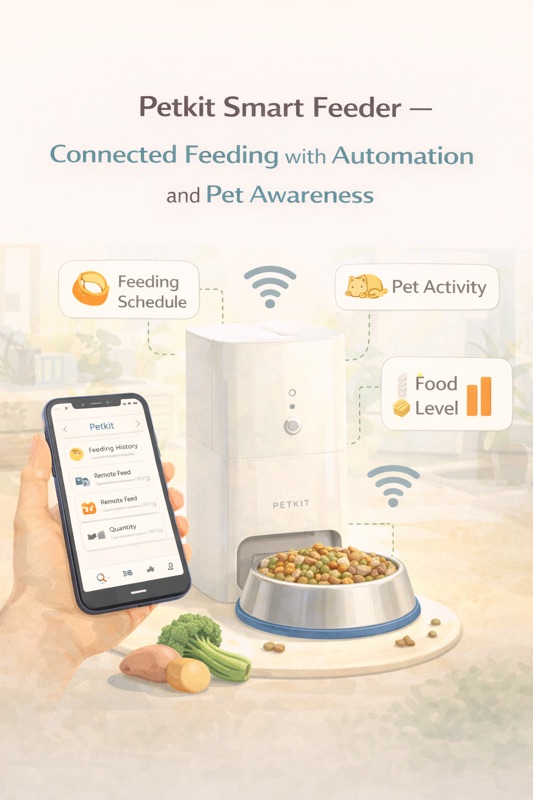
Petkit Smart Feeder is an intelligent automatic pet feeder that uses scheduling, portion control, and mobile app integration to manage feeding routines. This review explains how it works, where it adds value, and what to consider before buying.
Introduction
Feeding a pet might seem like a simple act, but anyone who has ever juggled work, errands, travel, or unpredictable schedules knows it can quickly become a point of stress. Traditional daily feeding routines rely on memory, consistency, and physical presence — all of which can easily slip when life gets busy.
Pet owners who want convenience, structure, and control increasingly gravitate toward automated feeders. However, not all smart feeders are created equal. Some simply dispense food on a timer, while others attempt to weave intelligence, customization, and digital interaction into the feeding process.
The Petkit Smart Feeder positions itself in the latter category. More than a mechanical food dispenser, Petkit claims to help owners manage portions, regulate schedules, and maintain healthier feeding habits — all via a connected mobile app. But does it deliver real value, or is it a gadget with basic automation dressed up as innovation?
This review dives into Petkit Smart Feeder as a system — how it works, what it accomplishes, where it succeeds, and where it falls short.
What Is Petkit Smart Feeder?
At its core, Petkit Smart Feeder is an automated pet feeding device designed to manage meal schedules and portion sizes without daily manual involvement. It is intended for dogs and cats of various sizes and activity levels, with a focus on maintaining routine and reducing the guesswork that often accompanies manual feeding.
Unlike simple mechanical feeders that operate with a single timer, Petkit integrates with a mobile app to offer scheduling flexibility, portion adjustments, and remote control.
System Components and Architecture
Hardware Design
The physical feeder typically consists of:
- Food storage hopper: Holds dry pet food.
- Dispensing mechanism: Releases measured portions.
- Control panel: For manual operation when needed.
- Sensors: To detect food levels or potential jams.
- Power supply: Often both AC power and battery backup options.
The feeder is built with a focus on durability and ease of cleaning, with food-safe materials for long-term use.
Connectivity and Communication
The Smart Feeder connects to the home Wi-Fi network, which allows it to:
- Receive feeding instructions remotely
- Sync with the mobile app
- Provide status updates (e.g., food level alerts)
This Wi-Fi integration distinguishes it from offline automatic feeders that operate solely on time, without remote oversight.
Mobile Application
The Petkit mobile app serves as the primary user interface for controlling the feeder. Key functions typically include:
- Scheduling meals by time and portion size
- Remote feeding commands
- Notifications for low food levels
- History of feeding times and quantities
- Integration with other Petkit pet wellness devices (optional)
The app is essential to the “smart” experience — without it, the device functions like a programmable timer.
Core Features and Functionality
Custom Meal Scheduling
The Smart Feeder allows owners to program:
- Multiple feeding times per day
- Different portion sizes for each meal
- Adjustments based on day of the week
This flexibility helps maintain consistent routines for pets with specific dietary needs.
Portion Control
Portion management is a significant feature, especially for pets that need weight control or precise nutrition. Owners can define:
- Grams per meal
- Number of meals per day
- Portion increments for fine adjustment
This is particularly useful for weight-sensitive dogs and cats, where overfeeding can contribute to obesity or digestive issues.
Remote Feeding
Even when away from home, owners can activate a feeding action directly from the app. This feature is useful for:
- Unexpected delays
- Erratic schedules
- Mid-day treats or supplemental feeding
Alerts and Monitoring
The system typically supports:
- Low food warnings
- Feeder jam alerts
- Feeding confirmation notifications
These help owners stay informed about the device’s status without checking manually.
Practical Use Cases
Busy Professionals
For owners with irregular work hours or frequent travel, Petkit Smart Feeder provides a reliable way to keep meal times consistent, reducing stress and avoiding missed feedings.
Weight Management Programs
Pets on weight control or specific dietary regimens benefit from controlled portions that can be defined and tracked over time.
Multi-Pet Households
With appropriate portion settings and multiple daily schedules, the feeder can help serve different pets according to specific feeding needs, provided the food type is the same.
Where Petkit Smart Feeder Excels
Convenience
Automating feeding routines is a clear convenience for busy or absent owners. The Petkit Smart Feeder eliminates the need to manually measure and dispense food multiple times per day.
Portion Precision
Compared to manual scoops, electronically controlled portions are more consistent. This is critical for diets that require specific calorie counts.
Remote Control and Alerts
The ability to see food levels and trigger feedings remotely adds peace of mind — especially during travel or unexpected schedule changes.
Integration with Other Petkit Devices
For owners in the Petkit ecosystem (e.g., smart water fountains, activity trackers), the feeder can become part of a broader pet well-being platform, allowing data continuity and more cohesive care insights.
Limitations and Considerations
Dry Food Only
Petkit Smart Feeder is designed primarily for dry kibble. It does not handle wet or semi-moist foods well, which limits its use for pets that require specialized diets.
Dependence on Wi-Fi
Remote features and notifications depend on stable internet connectivity. In environments with intermittent Wi-Fi, app control may be unreliable.
App-Centered Operation
The smart experience hinges on the mobile application. Owners who prefer hardware-only controls will find the smart features less accessible without app engagement.
Cost vs. Benefits
Automated feeders vary in price. Owners should weigh the convenience and features against their pet’s specific needs and budget. In many cases, simpler automatic feeders may suffice for basic feeding routines at a lower cost.
Comparison with Conventional Feeders
|
Feature
|
Petkit Smart Feeder
|
Basic Automatic Feeder
|
|
Wi-Fi Connectivity
|
✔️
|
❌
|
|
Remote Control
|
✔️
|
❌
|
|
Portion Programming
|
✔️
|
Limited
|
|
Alerts and Notifications
|
✔️
|
❌
|
|
App Integration
|
✔️
|
❌
|
|
Wet Food Support
|
❌
|
Depends
|
The Smart Feeder adds digital control layers to an otherwise mechanical task, making it more adaptable and responsive.
Ethical and Practical Responsibility
Automating meals does not replace attentive care. Owners should:
- Regularly check that the feeder dispenses properly
- Ensure pets are eating normally (no skipped meals)
- Combine automation with regular human interaction
- Consult veterinarians for medical diets
Automation should support care, not replace the owner’s role entirely.
Final Insight
Petkit Smart Feeder is a capable tool for owners who want consistency, control, and remote feeding flexibility. It is particularly useful for:
- Busy schedules
- Multi-meal routines
- Partial travel support
- Portion control
However, it is not a substitute for hands-on care, and it works best as part of an overall pet wellness strategy.
For pet owners seeking structured feeding with digital control and alerts, Petkit Smart Feeder delivers meaningful convenience without overpromising. Its strength lies in handling the routine reliably so the owner can focus on broader aspects of care.


Comments
Post a Comment